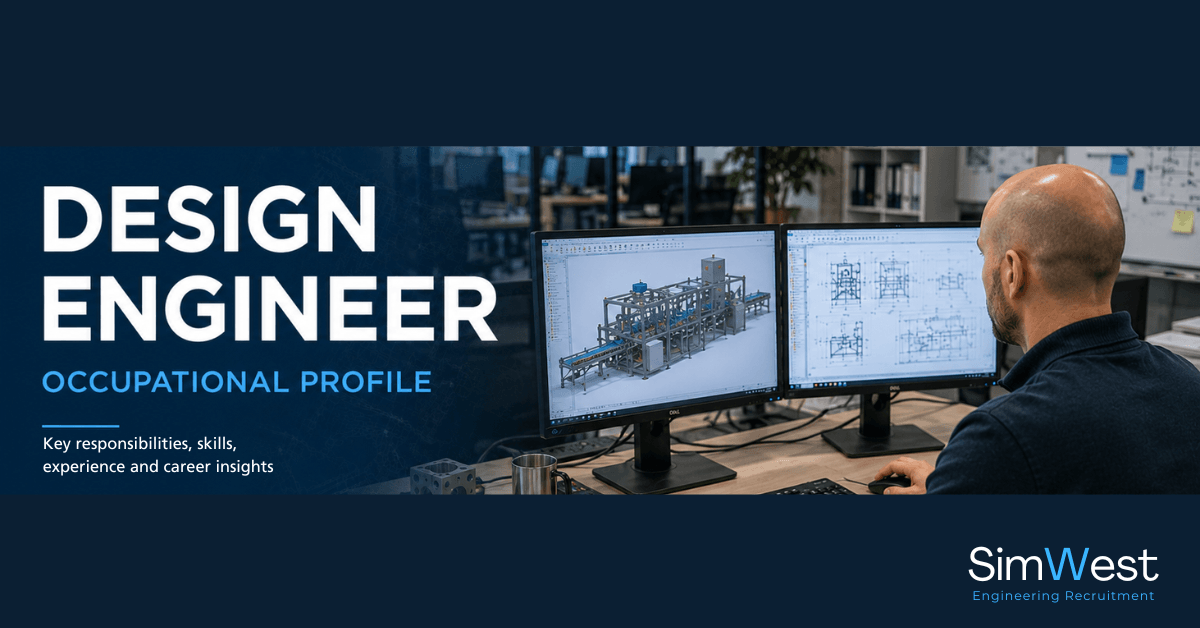
Design Engineer Occupational Profile
Design Engineer Occupational Profile
Design Engineers play a central role in OEM machinery, automation, special purpose machinery and manufacturing environments.
They turn technical requirements into practical, buildable and commercially viable engineering solutions. In machinery-led businesses, this can involve everything from concept development and 3D CAD modelling through to detailed drawings, design calculations, production support, customer changes, design reviews and build-stage problem solving.
In the best engineering environments, Design Engineers are not hidden away behind drawings. They work closely with production, assembly, controls, projects, purchasing, suppliers and customers to make sure the equipment can be manufactured, installed, maintained and used properly in real operating conditions.
SimWest Engineering Recruitment supports Design Engineer recruitment across Manchester, the North West and the wider UK, with a particular focus on OEM machinery, automation, food and drink, FMCG, special purpose machinery and manufacturing businesses.
What does a Design Engineer do?
A Design Engineer is responsible for creating, developing and improving products, machinery, equipment, components or systems.
In OEM, automation and machinery manufacturing environments, the role is usually practical and project-led. A Design Engineer may be involved from initial customer requirement through to design, manufacture, assembly, test, installation and aftersales support.
Typical responsibilities include:
- Creating 3D CAD models and detailed 2D engineering drawings
- Designing mechanical assemblies, fabricated parts, sheet metal components, frames, guards, conveyors, handling systems or machine modules
- Producing bills of materials and supporting purchasing activity
- Carrying out design calculations and tolerance checks
- Supporting design for manufacture and design for assembly
- Working with production, fabrication, assembly and controls teams
- Resolving design issues during build or commissioning
- Reviewing customer specifications and technical requirements
- Supporting continuous improvement and product development
- Updating legacy drawings and improving existing equipment designs
- Ensuring designs meet safety, compliance and quality requirements
The exact role depends heavily on the company. A Design Engineer in a product manufacturer may focus on repeatable product improvement, while a Design Engineer in special purpose machinery may work on bespoke equipment where every project is slightly different.
Design Engineer environments
Design Engineer roles can vary significantly depending on the engineering environment.
OEM machinery manufacturers
In an OEM machinery business, Design Engineers usually work on equipment that is designed, built and supplied to external customers. This might include packaging machinery, processing equipment, filling systems, conveyors, handling systems, inspection equipment or production machinery.
The role often involves close contact with sales, projects, assembly and commissioning teams. Commercial awareness is important because the design has to work technically while also being buildable, cost-effective and deliverable within project timescales.
Automation and special purpose machinery
Design Engineers in automation and special purpose machinery environments often deal with more bespoke projects. These roles suit engineers who enjoy solving new problems rather than repeatedly designing the same product.
Common areas include:
- Robotic handling systems
- Automated assembly equipment
- End-of-line packaging systems
- Bespoke production machinery
- Conveying and transfer systems
- Jig, fixture and tooling design
- Machine guarding and safety systems
- Process machinery and integrated production equipment
These roles often require a practical mindset. The best Design Engineers understand how their designs will behave once built, installed and maintained.
Manufacturing and FMCG
In manufacturing environments, Design Engineers may support site-based projects, machinery modifications, process improvements, reliability upgrades or capital investment projects.
Within food, drink and FMCG manufacturing, design considerations can include hygiene, washdown, guarding, maintainability, changeovers, uptime, line efficiency and operator safety.
Mechanical Design Engineer vs Electrical Design Engineer
Design Engineer is a broad title. The most common split is between mechanical design and electrical design.
Mechanical Design Engineer
A Mechanical Design Engineer usually focuses on physical machinery, assemblies, components and mechanical systems.
Typical areas include:
- 3D CAD modelling Fabrication and sheet metal design
- Welded frames and machine structures
- Mechanical assemblies
- Pneumatics and motion systems
- Bearings, shafts, motors and drives
- Conveyors and handling equipment
- Tolerancing and drawing production
- Design for manufacture and assembly
Electrical Design Engineer
An Electrical Design Engineer usually focuses on the electrical design of machinery, panels, control systems and automation equipment.
Typical areas include:
- Electrical schematics
- Control panel design
- Cable schedules
- PLC hardware layouts
- Safety circuits
- Electrical compliance
- Controls integration
- Working with PLC, automation and commissioning teams
The SimWest 2026 Design Engineering Salary Survey found a salary premium for electrical and control systems design professionals, with Electrical / Control Systems design respondents reporting a median salary of £51,785, compared with £43,589 for mechanically biased respondents.
Key skills employers look for in a Design Engineer
Employers usually assess Design Engineers on a mixture of technical ability, practical judgement and communication.
Key skills include:
- Strong 3D CAD capability
- Good understanding of engineering drawings
- Practical mechanical or electrical design knowledge
- Design for manufacture experience
- Problem-solving ability
- Attention to detail
- Ability to work with production and assembly teams
- Understanding of materials, tolerances and build methods
- Ability to manage design changes
- Commercial awareness
- Communication with internal teams, suppliers and customers
In OEM and machinery environments, practical experience is often as important as qualifications. Employers want Design Engineers who understand how equipment is actually built and used.
Common CAD and engineering software
The software required will depend on the business, sector and design discipline.
Common mechanical design packages include:
- SolidWorks
- Autodesk Inventor
- AutoCAD
- Creo
- Solid Edge
- CATIA
- Fusion 360
Common electrical design packages include:
- EPLAN
- AutoCAD Electrical
- SEE Electrical
- SolidWorks Electrical
Some employers will insist on a specific package, but many will consider engineers who have used similar systems. For most design roles, strong engineering understanding is more important than exact software match.
Typical Design Engineer job titles
Design Engineer roles may be advertised under several different titles, including:
- Design Engineer
- Mechanical Design Engineer
- Electrical Design Engineer
- CAD Design Engineer
- Machinery Design Engineer
- Automation Design Engineer
- Product Design Engineer
- Project Design Engineer
- Senior Design Engineer
- Lead Design Engineer
- Design Manager
Job titles do not always tell the full story. Two Design Engineers with the same title may have very different levels of responsibility, depending on whether they own projects, speak to customers, mentor others or support production.
Design Engineer Salary Guide
Design Engineer salaries vary depending on discipline, sector, location, CAD skills, project ownership and leadership responsibility.
According to the SimWest Engineering Recruitment 2026 Design Engineering Salary Survey, the median salary for a Mechanical Design Engineer was £43,589, while the median salary for a Senior Mechanical Design Engineer was £52,082. The survey also found a median salary of £64,604 for Design Manager / Design Lead roles.
For a more detailed breakdown, visit our Design Engineer Salary Report 2026.
Read the Design Engineer Salary Report 2026.
Career progression for Design Engineers
Design Engineers can progress in several directions.
Common routes include:
- Junior Design Engineer
- Design Engineer
- Senior Design Engineer
- Lead Design Engineer
- Design Manager
- Project Engineer
- Applications Engineer
- Technical Sales Engineer
- Engineering Manager
- Product Development Engineer
- Mechanical Engineering Manager
- Electrical Engineering Manager
Some engineers stay close to hands-on design throughout their career. Others move into project management, technical leadership, sales support, operations or engineering management.
The best route depends on the individual’s strengths. A strong Design Engineer may not always want to become a people manager, and many employers now value senior technical specialists who can lead complex design work without moving fully away from engineering.
Hiring a Design Engineer
Recruiting a good Design Engineer can be difficult, particularly in OEM machinery, automation and manufacturing environments.
The strongest candidates are often already employed, involved in live projects and not actively searching job boards. Salary, flexibility, technical challenge, project variety and business stability all influence whether they will consider a move.
When hiring, employers should be clear on:
- The type of design work involved CAD package requirements
- Whether the role is bespoke or repeat product design
- Level of project ownership
- Customer contact
- Production and build support
- Salary range
- Hybrid working expectations
- Progression route
- Why the role is genuinely attractive
SimWest Engineering Recruitment supports businesses hiring Design Engineers across Manchester, the North West and the wider UK.
Need help hiring? Visit our Mechanical Design Engineer Recruitment page or contact SimWest.
Looking for a Design Engineer job?
For Design Engineers, the right move is rarely about job title alone. The important questions are usually:
- Will you be designing new machinery or modifying existing products?
- Will you see your designs built?
- How much project ownership will you have?
- Will you work closely with production and assembly?
- Is there technical progression?
- Is the salary aligned with the current market?
- Does the business understand design engineering properly?
SimWest supports Design Engineers looking for roles in OEM machinery, automation, special purpose machinery and manufacturing environments.
Explore Design Engineer Jobs or submit your CV.