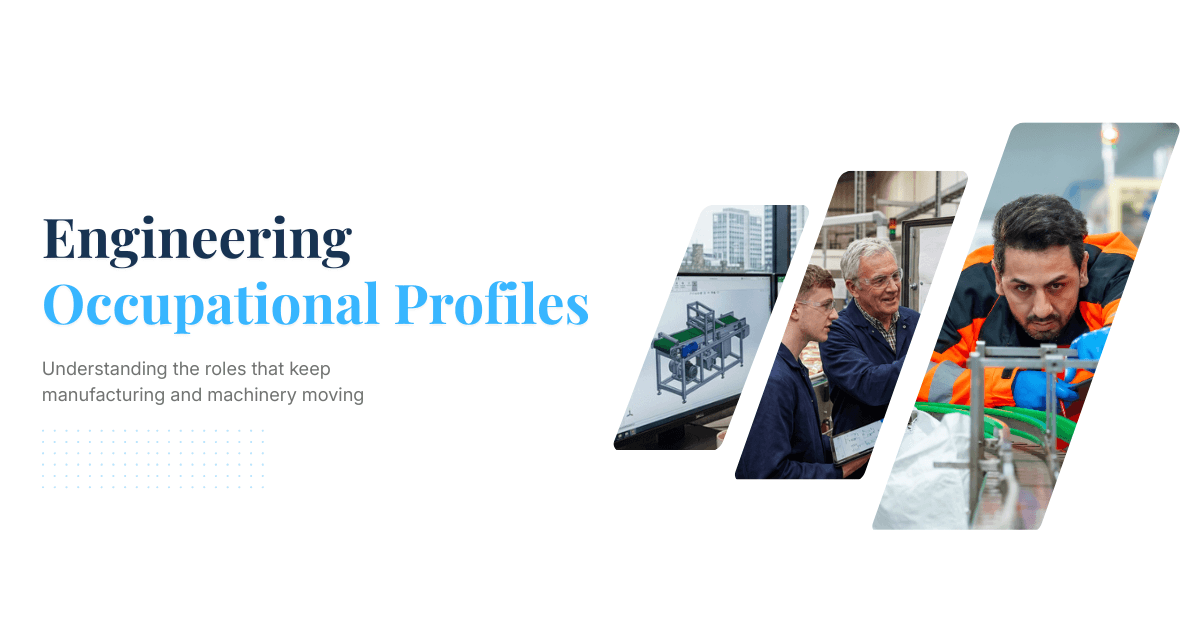
Engineering Occupational Profiles | Engineering roles in Manufacturing & Machinery
Understanding the engineering roles that keep manufacturing and machinery businesses moving
Engineering job titles can often sound straightforward, but the reality behind each role can vary significantly depending on the sector, machinery, working environment and level of responsibility.
A Design Engineer in an OEM machinery business may be involved in concept development, 3D CAD modelling, manufacturing drawings, design calculations, production support and build-stage problem solving.
A Maintenance Engineer in a Food, Drink or FMCG manufacturing environment may be responsible for keeping high-speed production lines running, fault finding on automated equipment, supporting planned maintenance and responding quickly to breakdowns.
A Design Manager may combine technical leadership, design review, team development, project ownership, customer interaction and responsibility for engineering standards.
That is why SimWest Engineering Recruitment has created this engineering occupational profile hub.
These profiles are designed to help employers, hiring managers and engineering professionals better understand the skills, responsibilities, career routes and recruitment considerations behind key engineering roles across manufacturing, OEM machinery, automation, packaging, Food, Drink and FMCG environments.
What are engineering occupational profiles?
Engineering occupational profiles explain what specific engineering roles involve in real working environments.
They go beyond a basic job title by looking at:
- Typical responsibilities
- Common job titles
- Technical skills required
- Machinery and manufacturing environments
- Career progression routes
- Salary considerations
- Hiring challenges
- What candidates usually look for in a role
- How employers can position vacancies more effectively
For employers, these profiles can help shape clearer job descriptions, improve vacancy adverts and benchmark expectations before going to market.
For candidates, they can provide a clearer understanding of how different engineering roles compare, what skills are valued and how career progression may develop over time.
Engineering roles covered
Maintenance Engineer in Food & Drink Occupational Profile
Maintenance Engineers are critical to Food, Drink and FMCG manufacturing environments.
They help keep production lines running safely, efficiently and reliably. Their work can include reactive breakdown support, planned preventive maintenance, fault finding, machinery improvements, electrical and mechanical repairs, PLC fault finding, continuous improvement and support for automated production equipment.
In high-speed manufacturing environments, the best Maintenance Engineers do more than fix breakdowns. They help improve uptime, reduce repeat failures, support production teams and contribute to long-term site performance.
This profile is useful for employers hiring Mechanical Maintenance Engineers, Electrical Maintenance Engineers, Multi-Skilled Maintenance Engineers, Shift Engineers, Engineering Technicians and Maintenance Team Leaders.
Read the Food & Drink Maintenance Engineer Occupational Profile
Design Engineer Occupational Profile
Design Engineers play a central role in OEM machinery, automation, special purpose machinery and manufacturing environments.
They are responsible for turning technical requirements into practical, buildable and commercially viable engineering solutions. In machinery-led businesses, this can include concept design, 3D CAD modelling, detailed drawings, design calculations, design for manufacture, production support and technical problem solving during build or commissioning.
This profile is useful for employers hiring Mechanical Design Engineers, Electrical Design Engineers, CAD Design Engineers, Automation Design Engineers, Senior Design Engineers and machinery-focused design professionals.
Read the Design Engineer Occupational Profile
Design Manager Occupational Profile
Design Managers are responsible for leading design teams, maintaining engineering standards and ensuring design work is delivered accurately, commercially and on time.
In OEM machinery, automation and manufacturing environments, a Design Manager often needs to combine technical authority with people leadership. The role may involve design reviews, team mentoring, workload planning, project input, customer discussions, design sign-off, process improvement and cross-functional collaboration with production, projects, controls, purchasing and senior management.
This profile is useful for employers hiring Design Managers, Lead Design Engineers, Senior Design Engineers moving into leadership, Engineering Managers and technical leaders within machinery manufacturing businesses.
Read the Design Manager Occupational Profile
Why engineering job titles do not always tell the full story
One of the biggest challenges in engineering recruitment is that the same job title can mean different things in different businesses.
For example, a Mechanical Design Engineer in one company may spend most of their time producing drawings and making small design changes. In another business, they may own full machinery projects from concept through to manufacture, installation and commissioning.
A Maintenance Engineer in one manufacturing site may be mainly mechanical. In another, they may need strong electrical fault-finding ability, PLC knowledge and experience with automated packaging lines, conveyors, robotics, checkweighers, metal detectors, filling systems or process equipment.
A Design Manager may be a hands-on technical lead in one business, but a people manager and strategic engineering leader in another.
This is why role context matters.
Good engineering recruitment depends on understanding:
- the machinery involved
- the manufacturing environment
- the level of technical ownership
- the level of customer or supplier contact
- the practical demands of the role
- the reporting structure
- the career route available
- the difference between essential and desirable skills
How these occupational profiles help employers
For employers, these profiles can support better hiring decisions before a vacancy goes live.
They can help you think through:
- What the role actually needs to deliver
- Which technical skills are essential
- Which experience could be transferable
- Whether the salary is aligned with the level of responsibility
- How to make the vacancy more attractive to passive candidates
- What candidates are likely to ask during the process
- How the role compares with similar jobs in the market
This is especially important when hiring into specialist engineering environments such as OEM machinery, automation, special purpose machinery, Food & Drink manufacturing, packaging equipment and high-volume FMCG production.
The strongest candidates are often already employed. To attract them, the role needs to be clear, credible and properly positioned.
How these occupational profiles help candidates
For engineering professionals, these profiles can help you understand how your experience may fit into different types of manufacturing and machinery businesses.
They can help you assess:
- What different engineering roles involve
- How your skills may transfer between sectors
- What employers may expect at different levels
- How your current role compares with the wider market
- What career routes may be available
- What questions to ask before considering a move
A job title is only one part of the picture. The machinery, culture, technical challenge, salary, working pattern, progression route and level of ownership all matter.
Engineering environments covered
SimWest Engineering Recruitment works with engineering and manufacturing businesses across a range of machinery-led environments, including:
- Food and Drink manufacturers
- FMCG manufacturers
- OEM machinery manufacturers
- Special purpose machinery builders
- Automation and robotics businesses
- Packaging machinery manufacturers
- Food processing machinery businesses
- Process-led production environments
- High-speed manufacturing sites
- Engineering-led manufacturing businesses
These environments often require engineers who understand machinery, production demands, practical engineering problems and the importance of keeping projects and production lines moving.
Common engineering roles in manufacturing and machinery
Engineering roles commonly found across these environments include:
- Maintenance Engineer
- Multi-Skilled Maintenance Engineer
- Electrical Maintenance Engineer
- Mechanical Maintenance Engineer
- Engineering Manager
- Design Engineer
- Mechanical Design Engineer
- Electrical Design Engineer
- Senior Design Engineer
- Lead Design Engineer
- Design Manager
- Controls Engineer
- Automation Engineer
- Project Engineer
- Manufacturing Engineer
- Service Engineer
- Commissioning Engineer
- Mechanical Fitter
Further occupational profiles will be added over time to build a practical resource for employers and candidates across the UK engineering and manufacturing market.
Engineering recruitment support from SimWest
SimWest Engineering Recruitment supports manufacturing and machinery businesses hiring specialist engineering talent across Manchester, the North West and the wider UK.
Our focus is on engineering roles within Food, Drink, FMCG, OEM machinery, special purpose machinery, automation, packaging and wider manufacturing environments.
We help employers define the role properly, understand the market, identify suitable candidates and approach people with the technical experience, working environment exposure and long-term fit required.
Whether you are hiring a Design Engineer, Design Manager, Maintenance Engineer or another specialist engineering role, we can help you understand what the market looks like and how to position the opportunity effectively.
Speak to SimWest Engineering Recruitment
If you are hiring for an engineering role and want a clearer view of the market, SimWest Engineering Recruitment can help.
We support employers with specialist engineering recruitment across manufacturing, machinery, Food, Drink, FMCG, automation and packaging environments.
Speak with an Engineering Recruitment expert about you hiring needs
FAQs
What is an engineering occupational profile?
An engineering occupational profile explains what a specific engineering role involves, including typical responsibilities, skills, working environments, career routes and hiring considerations. It gives more detail than a standard job title or vacancy advert.
Why are engineering occupational profiles useful for employers?
They help employers understand what a role should include, which skills are essential, how the role fits within the wider engineering team and how to position the vacancy more effectively to candidates.
Why are engineering occupational profiles useful for candidates?
They help candidates understand how different engineering roles compare, what employers may expect and how their experience could transfer into other manufacturing, machinery or engineering-led environments.
What engineering roles does SimWest Engineering Recruitment cover?
SimWest Engineering Recruitment supports roles including Design Engineers, Design Managers, Maintenance Engineers, Controls Engineers, Automation Engineers, Project Engineers, Service Engineers, Mechanical Fitters and Engineering Managers.
Which sectors do these occupational profiles focus on?
The profiles focus mainly on manufacturing, OEM machinery, special purpose machinery, automation, packaging, Food, Drink and FMCG environments.
Does SimWest Engineering Recruitment only recruit in Manchester?
No. SimWest Engineering Recruitment is based in Manchester but supports engineering and manufacturing businesses across the North West and the wider UK.